
News
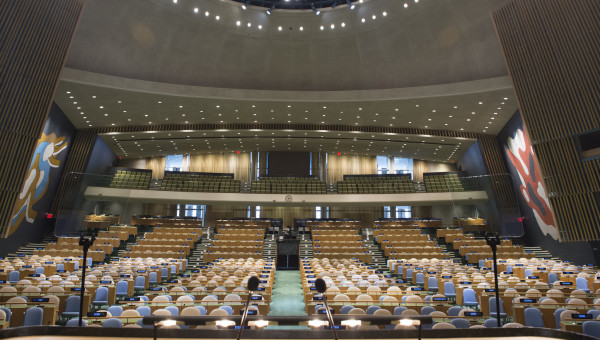
The fourth round of negotiations on a UN framework convention on tax took place in New York from 2 to 13 February 2026. Discussions focused on establishing common international rules to improve the taxation of multinational corporations and extreme wealth, in line with sustainable development and human rights. In addition to the convention text itself, two protocols were discussed: one on the taxation of cross-border services, and one on the prevention and resolution of tax disputes.
1. The taxation of global profits is still fiercely disputed
Article 5 of the draft convention, which deals with a fairer global allocation of taxing rights, was the subject of heated debate. The good news is that, despite all the differences, there is at least a growing awareness that, under the current tax rules, the taxation of multinational corporations does not take place where it should — namely, where economic activity actually occurs.
During the first week of negotiations, a delegate from India summed up why this is a problem: “The question that often comes to our minds is: where is value being created? Is it in countries like India, where most of the software development work is done, or is it created in the parent company, where decision-makers sign off on decisions made by engineers in India?”
2. Pressure is mounting for a shift to taxing global profits
The international tax justice movement has therefore long been calling for a paradigm shift, moving away from the outdated 'arm's length' principle (pay where you say) towards 'unitary tax' (pay where you play), whereby taxation rights are divided between countries according to specific 'economic activity' criteria.
Recent studies show that a formulaic approach to the allocation of taxing rights according to economic activity would deprive tax havens of their business base and benefit everyone else. According to these studies, countries in the Global South would generate significantly higher revenues if employment was also taken into account as a criterion for economic activity. Overall, global tax revenues could increase by up to $700 billion per year.
3. Germany resists reopening existing treaties
Draft Article 5 allows for the renegotiation of existing tax agreements to ensure a fairer allocation of taxation rights. However, Germany and other countries opposed this, arguing that the convention should mainly supplement existing regulations, and that renegotiations should remain bilateral and voluntary.
But if there are no plans to renegotiate unfair tax rules from the past, how can a new, fairer system be created? Everlyn Kavenge of the Tax Justice Network Africa (TJNA) summed it up: 'After a whole century in which source countries have been limited in their taxation options, it is time for change, even if it affects three thousand double taxation agreements.'
4. Information exchange emerges as a major point of contention
There were heated discussions on Article 10, which regulates the exchange of information. Here, too, Germany and other OECD countries argued that it should not conflict with existing rules, and that it should either be deleted entirely or integrated into other articles.
Although the exchange of information is often considered a technical matter, it is politically central to combating tax avoidance, money laundering and other illicit financial flows. Developing countries are increasingly unwilling to submit to a set of rules shaped by others. The Chair of the UN Tax Convention's Intergovernmental Negotiating Committee, Mr Ramy Youssef, summarised their demands regarding the exchange of information as follows:
- Move from consultation to co-creation: Current and future standards must be designed by everyone and take into account diverse economic realities.
- Restore reciprocity and trust: Transparency must be a shared global obligation, not just a burden for developing countries.
- Change the approach to capacity: Stop viewing challenges as solely the problem of developing countries. Build a framework that supports domestic policy.
Despite many unresolved issues, it became clear time and again that the negotiations, which will run until 2027, are a historic opportunity to make international tax rules fairer and that more can be gained than lost by working together.
Countries and interest groups are asked to submit comments on the convention text until 6 March 2026. The next round of negotiations is planned for the summer. By then, it will be clearer whether the OECD countries will succeed in their demand for a 'high-level' convention that covers little in terms of substance and defers all contentious issues to protocols, or whether a major breakthrough in international tax cooperation can be expected. Much remains at stake.
