Global Policy Forum

What's new

NGOs remind Juncker of effective tax policies

Letter_from_Tax_Justice_Europe_to_the_European_Commission_Mar_2015Several European NGOs are urging Jean-Claude Juncker, President oft he European Commission, to step up the ambition level for a comprehensive tax reform package for the EU. Several scandals have recently shaken the continent and shown that EU members are damaging themselves and one another with unfair and divisive tax policies. Furthermore, EU policies and positions are making it difficult for countries in the Global South to raise urgently needed resources to fund the realization of human rights. To this end, the organizations are calling for a set of concrete policy reforms that could be enacted and supported by the EU.

Read more...
 

Indicators for a post-2015 'fiscal revolution'

ca_and_cesrThe new working paper by Christian Aid and the Center for Economic and Social Rights responds to the list of preliminary indicators that the the United Nations Statistical Commission is considering. Their analysis and concrete proposals are based on the premise that a human rights-aligned fiscal data revolution is essential to expose the hidden injustices buried in the way resource-related policies are conducted, and who truly benefits from them.
Read more...
 

DAWN briefing on Financing for Development (FfD)

dawn_blueOn January 28-30, 2015, members of Development Alternatives with Women for a New Era (DAWN) attended the First Drafting Session for the outcome document of the third International Conference on Financing forDevelopment (FfD3) at the United Nations Headquarters. As a result, a policy paper by Nicole Bidegain reviews the main elements of the FfD process in order to set current debates in context, identify conflict areas between the different blocks of countries, and introduce some of the recommendations DAWN has been promoting with the purpose of reorienting global economic governance and development patterns towards economic, ecological, and gender justice. It is available in English and Spanish.

Read more...
 

Unhappy Meal: €1 Billion in Tax Avoidance on the Menu at McDonald's

A nUnhappy_Meal_1_Billion_in_Tax_Avoidance_on_the_Menu_at_McDonaldsew report "Unhappy Meal: €1 Billion in Tax Avoidance on the Menu at McDonald's" by EFFAT, EPSU, SEIU and War on Want outlines in detail what the authors call tax avoidance strategies adopted by McDonald’s and their tax impact both throughout Europe and in major markets like France, Italy, Spain and the U.K. The practice, the coalition says, essentially consisted of moving the European headquarters from the UK to Switzerland as well as using intra-group royalty payments and channeling them into a tiny Luxembourg based subsidiary with a Swiss branch. Between 2009 and 2013, the Luxembourg-based structure, which employs 13 people, registered a cumulative revenue of €3,7 billion, on which it reported a meager €16 million in tax.

Read more...
 

Syria's world cultural heritage and individual criminal responsibility

Qalat_ibn_maan03js

Photo: Jerzy Strzeleck

Recent reports have confirmed damage to five of the six Syrian world heritage sites during the current armed conflict as well as extensive looting of several of its archaeological sites on the Syrian Tentative List of world heritage. This article examines the role and fate of Syrian world cultural heritage from the beginning of the conflict, maps out the different cultural property obligations applicable to Syria while illustrating, where possible, how they may have been violated. Then, it assesses if and how those responsible for these acts can be prosecuted and punished. The analysis reveals an accountability gap concerning crimes against Syrian world cultural heritage. As such, the article proposes to reinstate the debate over crimes against common cultural heritage which once arose in the context of the Buddhas of Bamiyan.
Read more...
 

Food Security Governance Empowering Communities, Regulating Corporations

9780415529105The new book “Food Security Governance; Empowering Communities, Regulating Corporations” by Nora McKeon explores the global food governance at a crossroads. The global food crisis from 2008 affirmed that the struggle over the global food system is not between farmers in the ‘Global North’ and the ‘Global South’, but an intensified struggle between two opposing pathways for food and agriculture:  those upholding the dominant status quo model of industrial agriculture and those struggling for alternative models emphasizing local diversified and resilient food systems. Read a review by Ingeborg Gaarde.

Read more...
 

Information for the Nations

information-for-the-nations"In 2014, we saw yet another repeat of the claim that ‘banking secrecy is over’, as some countries began to commit to a new agreement to share information on money held offshore. But the picture is not consistent: with only 52 countries currently signed up to implementation, and very few of them developing countries, it seems that banking secrecy may be over for some, but not for others. In 2013 we identified the challenges involved in creating a system of information exchange that works for developing countries; now, with much of the new system in place, we assess the progress and consider what else needs to be done to ensure that banking secrecy really is over, for all." Christian Aid publishes a new report on how developing countries are being excluded from automatic information exchange in tax matters - and how this could be changed. The report has been endorsed by 18 more civil society organizations, including GPF.

Read more...
 

Spain’s austerity criticized again in UN human rights review

hrc.UN.jean.marc.ferre

Photo: Jean-Marc Ferré

The Center for Economic and Social Rights (CESR) reports about Spain’s failure to protect economic and social rights in times of economic crisis, which has come under stern criticism from other states at the country’s recent Universal Periodic Review (UPR) by the UN Human Rights Council. One after another, Spain’s peers in the community of nations voiced their concern over the erosion of economic and social rights after four years of ill-conceived austerity measures. The gravity of the deprivations evidenced in information provided by CESR and its national allies resulted in an unprecedented level of attention to economic and social rights concerns at the 21st session of the UPR in Geneva on 21 January.

Read more...
 

Joint Statement of the Chairpersons of UN Human Rights Treaty Bodies on Post-2015 Agenda

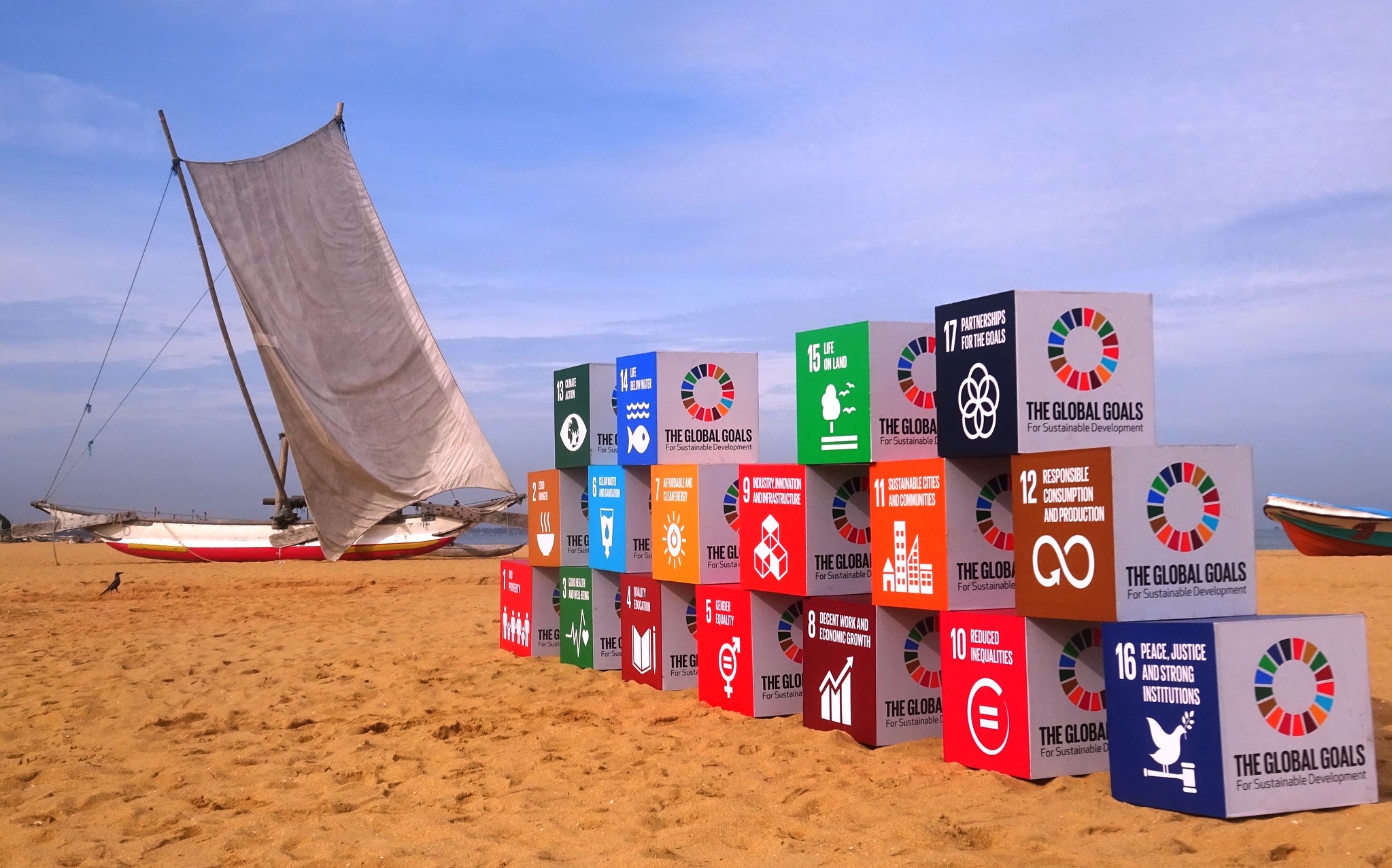
In250px-United_Nations_Human_Rights_Council_Logo a Joint Statement released by OHCHR, the Chairpersons of the United Nations Human Rights Treaty Bodies give their opinion on the post-2015 development agenda and call for accountability to be strengthened. Their call was issued as UN Member States started discussions to finalize the draft set of 17 sustainable development goals which will be put forward for adoption by heads of state at a UN summit in New York in September 2015. The statement also highlights the important role to be played by the private sector in achieving the SDGs, and the importance of ensuring private sector accountability.

Read more...
 

Reviewing the Post-2015 Sustainable Development Goals and Partnerships

Reviewing_the_Post-2015_Sustainable_Development_Goals_and_PartnershipsIn September 2015, the heads of state and government of the United Nations (UN) Member States are scheduled to decide on the Post-2015 agenda. This is to include not only a list of universal Sustainable Development Goals (SDGs) but also a mechanism for monitoring and review. What would the review mechanism have to look like to contribute to the implementation of sustainable development? Marianne Beisheim, researcher at the German Institute for International and Security Affairs (SWP) examines the debate taking place over the review process, highlights the positions of selected key actors, discusses criteria for designing a review, and applies these to analyze and assess existing review systems. Finally, she develops specific proposals for a universal, state-led, participatory, multi-level “Commit and Review” process that could serve as a central component of the follow-up process for the Post-2015 goals.

Read more...
 

The systematic destruction of cultural heritage at the hands of the Islamic State

Cultural_heritage_in_IraqA new article by Marina Lostal on the recent destruction of cultural heritage in Iraq. Iraqi officials have reported that, last Saturday 7 of March, the Islamic State destroyed Hatra, a 2,000-year-old fortified city around 100 km south-west of Mosul. The Islamic State is believed to have bulldozed the site and looted the cultural artifacts housed inside, including gold and silver objects. The Director-General of UNESCO, Irina Bokova, has declared that “[t]he destruction of Hatra marks a turning point in the appalling strategy of cultural cleansing underway in Iraq.”
Read more...
 

Upcoming Events during the UN Commission on the Status of Women

csw2015upcomingeventsWe are co-hosting two events at the UN Commission on the Status of Women, together with the Rosa Luxemburg Stiftung—New York Office, DAWN, and UNRISD in New York City. We will be joined by feminist activists and politicians from Germany, Croatia, Bolivia, Colombia, Nepal, Cambodia, and Kenya, to examine the structural causes of poverty and develop alternatives: "The SDG on Inequality: How Useful Can This Be for Women?" (Tuesday, March 10, 2015, 8:30-10:00 AM) and "20 Years after Beijing: How Can Women’s Movements Effectively Mobilize for Policy Change?" (Tuesday, March 10, 2015, 3:00-4:45 PM).

Read more...
 

UN Security Council banning all trade with Syrian antiquities

Max_Schdl_Stillleben_mit_orientalischen_Antiquitten_1907

A new article by Marina Lostal about the UN Security Council banning all trade with Syrian antiquities. On 12 February 2015 the UN Security Council adopted Resolution 2199 (2015) banning all trade with Syrian antiquities removed from the country since 15 March 2011 and reaffirming the same prohibition concerning Iraqi cultural objects illegally exported since 6 August 1990.
Read more...
 

Neuer Report: Gut leben global

GPF-Gut_leben-klIn den Verhandlungen über die globale Entwicklungsagenda für die Zeit nach dem Jahr 2015 beginnt nun die heiße Phase. Im September 2015 wollen die Vereinten Nationen die Post-2015-Agenda beschließen. Einen zentralen Baustein bilden die zukünftigen Ziele für nachhaltige Entwicklung, die SDGs. Sie sollen universelle Gültigkeit besitzen und sind damit auch für Deutschland relevant. Das Global Policy Forum und terre des hommes veröffentlichen vor diesem Hintergrund im Februar den Report „Gut leben global“. In ihm diskutieren wir, wie SDGs für Deutschland vor dem Hintergrund der Debatten über alternative Ansätze der Wohlstandsmessung aussehen können. Dabei geht es auch um Indikatoren, die die internationale Verantwortung Deutschlands und seinen Beitrag zur globalen Nachhaltigkeit erfassen.

Read more...
 

The "A" Word: Monitoring the SDGs

The_A_Word

In a new article released by Future United Nations Development System (FUNDS) , Roberto Bissio gives his take on the post-2015 process and suggests what must be done to ensure the promises made will be fulfilled. Twenty-two independent UN human rights rapporteurs wrote to the Rio+20 Summit that “real risk exists that commitments made in Rio will remain empty promises without effective monitoring and accountability.” This danger also exists for the Sustainable Development Goals (SDGs). The absence of specific targets for monitoring and accountability implies specific consensus about next steps is missing. In fact, many of the targets are essentially impossible to assess quantitatively because they refer to concepts for which there are no indicators or no internationally agreed definition. Governments are primarily responsible to their own citizens through oversight bodies such as parliaments, and so it will be up to civil society to demand and promote regular reporting on national progress.

Read more...
 

UN Financing for Development negotiations picking up speed

b79a192dca378c9d2dff0a94a2b35b99Despite snowstorm warnings and ice-cold temperatures in New York, the Financing for Development (FfD) negotiations managed to pick up speed when governments convened for the first drafting session at the end of January. They are currently negotiating the outcome of the upcoming Addis Ababa Conference on Financing for Development, which will take place on July 13-16 this year, and is planned as a key milestone ahead of the Post-2015 Summit and the UNFCCC Climate Conference later this year. Tove Maria Ryding of Eurodad reports from this latest round of negotiations.

Read more...
 

New Briefing Series: Global Policy Watch on Post-2015 and FfD3: Debates Begin, Political Lines Emerge

GPW1_2015_02_052015 is a pivotal year. The post–2015 sustainable development agenda currently being drafted is premised on the reality that the present model of development is not working, given worsening inequalities and straining planetary boundaries. All countries and peoples—and the planet on which we depend–have the right to live with a better model, one that is inclusive and sustainable.

To give credit to this occasion, Global Policy Forum and Social Watch launch a new briefing series on the Post-2015 and FfD3 processes today with a first issues on "Post-2015 and FfD3: Debates Begin, Political Lines Emerge. The subsequent briefings will look into negotiations, positions and ideas, will - when the time is ripe - look at the results and monitor their implementation. There is a lot more to come...

Read more...
 

CSOs respond to proposed elements of Financing for Development Agenda

CSO_Response_to_FfD_Elements_Paper_-_28_Jan_2015

A very broad international group of Civil Society Organizations has published a critical response to a paper outlining elements of a Financing for Development (FfD) Agenda by the co-chairs of the preparatory process of the upcoming 3rd FfD Conference in Addis Ababa in July 2015. Overall, the CSOs say, the document provides a good starting point for the first drafting sessions and includes most (but not all) of the policy proposals necessary to ensure a successful outcome of the Addis Ababa conference. However, the activists are concerned that the Elements paper does not follow the outcomes of previous FfD conferences, which raises several problems in terms of whose interests will be heard and what issues will be debated. Also, the lack of explicit language on the "global partnership for development" and the duties of states under the Human Rights and Millennium Declarations are highlighted.

Read more...
 

Side-event: Applying Common but Differentiated Responsibilities in a Financing Sustainable Development Context

1024px-Flags_at_the_UN
Picture: worldislandinfo.com

You are cordially invited to a side-event by the Permanent Mission of Brazil to the UN, CIDSE and Social Watch on Thursday, January 29, 2015 in the UN Conference Building, New York. Dealing with responsibilities in a financing sustainable development context, this event seeks to generate discussion on conceptual challenges such as an evenhanded approach to the three pillars of sustainable development, adapting a framework like the Financing for Development process to the universal agenda of the Sustainable Development Goals without denaturalizing and decontextualizing it and how to incorporate important principles agreed at the UN Conference on Sustainable Development.

Read more...
 

CSO submission to the UN General Assembly's new debt committee

800px-Dollar_symbol

Picture: Svilen.milev

Following the global financial crisis, low-, middle-and high-income countries are seeing increased levels of sovereign debt. Today, no international mechanism exists to deal comprehensively and effectively with sovereign debt problems. This submission to the UN ad hoc committee on debt that was prepared and endorsed by 27 Civil Society Organizations, calls for an international and independent debt workout mechanism.

Read more...
 

FAIR USE NOTICE: This page contains copyrighted material the use of which has not been specifically authorized by the copyright owner. Global Policy Forum distributes this material without profit to those who have expressed a prior interest in receiving the included information for research and educational purposes. We believe this constitutes a fair use of any such copyrighted material as provided for in 17 U.S.C ß 107. If you wish to use copyrighted material from this site for purposes of your own that go beyond fair use, you must obtain permission from the copyright owner.