News
There are countless cases in which economic activities lead to human rights abuses and violations. For those affected, it’s often difficult to get justice – particularly in cases that involve translational companies. This is precisely where the current negotiations on a UN Treaty on business and human rights come in: They aim to close legal loopholes and hold companies accountable.
Since their introduction in 2024, the thematic consultations have given the negotiations a significant momentum. The legal experts – who have been advising the process since that year – presented specific cases during the first consultations in April 2026 to illustrate existing legal hurdles.
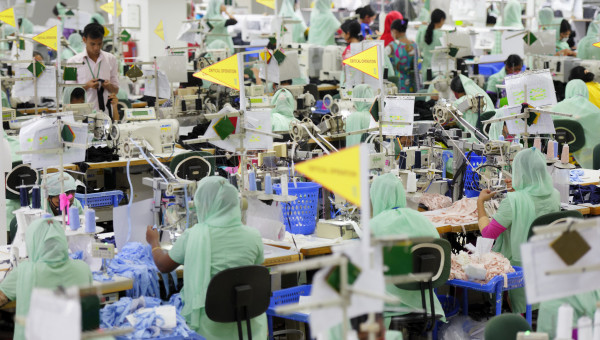
The case of Limbu & Others v Dyson Technology highlights how difficult it is to get justice when suppliers or their subsidiaries in the supply chain violate human rights. In the proceedings, 24 migrant workers brought a claim against companies within the Dyson Group, alleging abduction, forced labour and exploitative working conditions, including torture, in subcontractor factories. But because the human rights violations took place in Malaysia, the English parent company argued that the appropriate jurisdiction was Malaysia.
An appeal court disagreed and ruled that the case could be heard in England. A key factor was that the company’s decision-making, control mechanisms and relevant documents were based there. The court also found that the plaintiffs would have faced significant practical obstacles in accessing justice in Malaysia.
The case highlights a key problem: For victims, access to justice is often hampered by complex jurisdictional issues. The proceedings to establish jurisdiction in England alone were very costly and the plaintiffs have yet to receive any compensation. The case also reflects a broader trend in case law, according to which parent companies can be held liable for human rights violations along their global value chain, particularly if they exercise a certain degree of control.
The legal experts used the Dyson case to expose where the current system falls short. Further examples included the case of Lungowe v Vedanta and proceedings against Électricité de France (EDF): In Zambia, villagers sued Vedanta over environmental and health damage caused by a copper mine; in Mexico, an indigenous community opposed a planned EDF wind farm project without adequate prior consent.
The Limbu v Dyson case and many others highlight the gaps the UN Treaty is intended to close
The open-ended working group is currently negotiating a text that covers key issues relevant to ongoing cases and legal practice and the case studies can guide the ongoing deliberations.
A future treaty on business and human rights should explicitly address the following points to ensure better protection and access to justice:
- Identification and prevention of human rights abuses and violations
- Human rights due diligence and a legal duty of care across the value chain
- Liability when prevention and due diligence fail
- Joint and several liability where a company controls, manages or supervises
- Provisions on cross-border jurisdiction
- Limits on the use of/ prohibition of “forum non conveniens” where it denies access to justice
- Effective access to evidence and a shift in the burden of proof
- Protection for and consultation of victims and witnesses, including the right to free, prior and informed consent (FPIC)
- Access to class action mechanisms
- Prohibition of Strategic Lawsuits Against Public Participation (SLAPPs)
- Financial support for affected people and communities
The experts stressed that the working group is not acting in a legal vacuum. Laws on transnational business activities are evolving quickly, not just in Europe. A global agreement could help bring clarity and close existing legal gaps.
States are increasingly converging on key issues, particularly the scope of application
These consultations have once again shown that structured negotiations bring the relevant parties closer to a compromise. The legal experts’ written and oral proposals play a key role in this.
In the non-paper published right before the session, they outlined how, across different articles, voluntary or non-binding language could weaken the text, and why referencing domestic legal systems in most provisions is problematic. The working group should set higher global standards rather than cementing existing the patchwork and loopholes.
Even when Article 3 of the treaty, which defines its scope, including which companies are covered, was discussed, the deliberations remained open, constructive and productive. In 2023, this issue was still highly controversial.
This year, states moved noticeable closer to an agreement on whether the treaty should apply to all companies or only to transnational corporations (TNCs). A key shift in the non-paper helped move things forward: the focus is no longer on the administrative structure of companies, but on their actual activities.
This has a clear advantage. The treaty no longer needs a precise definition of “TNCs”, and companies cannot avoid its scope simply by restructuring.
The fact that Article 3 was discussed so quickly can be read in two ways: Either as a lack of interest or as a growing willingness to compromise and move the process forward. While business representatives continue to criticise the process, arguing that too few states are participating and that there is no agreement on key issues, the consultations suggest otherwise.
Despite the highly technical nature of the discussions, no state fundamentally questioned the process and many engaged constructively. The legal experts’ work was widely praised, and the chair was thanked for keeping things moving. The process has also seen international civil society, trade unions and human rights organisations appear more united than ever.
Further consultations and rounds of negotiations: The process will continue beyond 2026
It is still too early to say whether the process will lead to a successful outcome. For now, patience is needed. The working group secretariat has indicated that the additional resources allocated to the process under Human Rights Council decision 56/116 will continue to be used, meaning that the consultations will carry on between official sessions in 2027.
Alternatively, the additional negotiation days could be used to extend the 13th round of negotiations in autumn 2027.
One thing is clear: a new draft text will only be prepared after this year’s 12th session, scheduled for 19–23 October 2026. Before that, a third consultation on the preamble, Article 1 and the way forward will take place on 28–29 May 2026.
It is also clear that the process is gathering pace. The EU and Germany should live up to their international responsibilities and officially join the negotiations as soon as possible. A global treaty can create a level playing field, ensuring that companies with higher human rights standards are not disadvantaged. At the same time, it offers the opportunity to embed European principles at a global level and counter the fragmentation of the international human rights system.
Only a legally binding international instrument can effectively protect human rights, the environment and the climate in transnational business activities. Legal proceedings must become more accessible so that companies can no longer evade accountability and victims don’t wait years for effective remediation.
