News
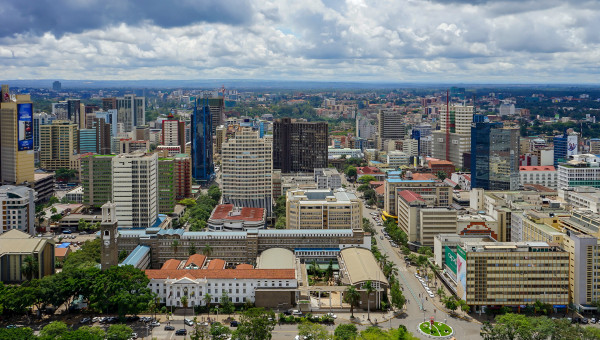
It was unprecedented in the history of multilateralism: The third round of negotiations on a UN tax convention marked the first time global tax negotiations took place on the African continent. Unlike OECD negotiations, the UN talks were not held behind closed doors, which enabled numerous civil society representatives and trade union organisations to travel to Nairobi to critically monitor them. Like the group of African states, they have long called for a paradigm shift in the taxation of multinational corporations away from the dysfunctional transfer pricing system toward a fairer, formula-based allocation of taxing rights via unitary taxation.
- The Global South is in the driver's seat
Instead of relying on double taxation agreements and the transfer pricing system, as has been the practice in the past, the convention would offer an opportunity to break new ground and allocation taxation rights more fairly based on criteria such as sales and employment.
On behalf of the Africa Group, Kenya had a clear draft wording ready for Article 4, which deals with the allocation of taxing rights between residence and source countries: “The State Parties agree that each jurisdiction where value is created, markets are located, or revenues are generated has the right to tax the income related to or derived from it.”
Overall, the Africa Group came to the table with a clear agenda. They called for public country-by-country reporting (pCbCR) and pointed to the transfer pricing system as the main source of tax disputes. Together with other Global South representatives, they showed unity in rejecting mandatory arbitration.
- Political decisions are needed
Apart from that, there was a lack of political direction at the negotiations in Nairobi. Discussions on the text of the convention itself remained subdued, and also the exchange about the two additional protocols – one on taxation of transborder services and one on dispute resolution – was mainly limited to technical details than dealing with the fundamental issues at stake. This was hardly surprising as most of the delegates came from specialist departments of ministries and tax authorities. Political representatives were hardly present.
Delegates from the Global North rehashed long-resolved sovereignty concerns, seemed unfamiliar with the concept of sustainable development and uncertain about how to deal with the Mbeki Panel's current UN definition of illicit financial flows, which explicitly includes tax-related financial flows. International civil society representatives who were present took aim at this awkwardness and offered the European Union some quick lessons on these issue in the FfD Chronicle, which accompanied the negotiations.
- The dangers of protocolisation
Given the current geopolitical context, it may seem tempting to adopt a consensus-based but empty shell text for the convention itself and to shift everything else into optional additional protocols.
However, international civil society warns against such “protocolisation,” as it would be the opposite of the paradigm shift that has been called for years and a missed opportunity. It is already clear that without clear political guidelines, the convention risks falling short of its transformative potential. International civil society has repeatedly called for the fair allocation of taxing rights and the taxation of the super-rich (HNWI) to be enshrined in the text of the convention itself.
Governments and other stakeholders still have until December 5 to submit written comments following the Nairobi negotiations. Civil society, organised in the Global Alliance for Tax Justice (GATJ), has already developed a comprehensive proposal for what a strong convention could look like.
Read Civil Society’s “Shadow Convention” here.
