News
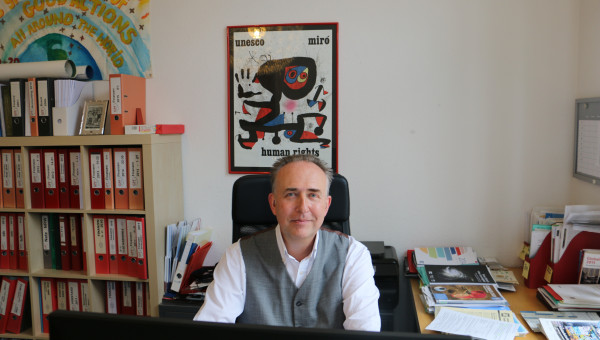
Jens Martens left this world far too soon. A world in which people like him are needed more urgently than ever. Jens would have dismissed this, as his marked modesty was one of his defining character traits. The smaller and larger events marking his departure as Managing Director of Global Policy Forum Europe in the summer of 2025 brought him joy, particularly as they gave him the chance to reunite with many companions from his decades of work. At the same time, the substance of his work was more important to him than being a public figure.
For Jens, his work was never about himself – or about making a name for himself. He was committed to the cause he had dedicated his life to. His aim was to make the world a fairer place, a place where all people have a genuine chance of a life in dignity. His aim was not merely to combat or alleviate symptoms, but to tackle the roots of injustice. He was concerned with changing the structures that bind states and societies together and which, to this day, are shaped by power imbalances dating far back in history.
Throughout his life, he placed his hopes in the United Nations, even though he never viewed it through rose-tinted glasses, but rather accompanied its development with a critical yet benevolent and constructive eye. Our paths first crossed in the 1990s, a decade full of hope. A fairer global order and the realisation of human rights – politically, socially and culturally – suddenly seemed within reach after the end of the Cold War. Global governance was the new magic word for shaping the advancing process of globalisation in such a way that, in the end, it would not be only the richest states and corporations that benefited. World conferences led to groundbreaking international agreements and institutions. Progress was by no means a foregone conclusion even in those days – as the title of the book ‘UN-williges Deutschland’ (UN-willing Germany), which Jens co-edited in 1997, made clear with its choice of adjective. But it was possible.
Jens was not a man of loud rhetoric or maximalist demands. He was firm and clear in his fundamental convictions, yet open-minded in the search for the best solutions. In doing so, he always saw even in hard-won compromises the tender seedling that had been planted and could now, hopefully, grow and flourish.
Jens never lost his optimism. Even when the euphoria of the 1990s gave way to widespread disillusionment, at the latest following 11 September 2001, he persisted in his work. He tirelessly countered the setbacks in the development of just international relations with creative ideas, astute arguments and thoroughly researched facts. The book he co-edited in 2001, 'Die Privatisierung der Weltpolitk' (The Privatisation of World Politics), is a case in point. His work consisted primarily of highlighting interconnections, analysing them precisely, devising feasible solutions and presenting them in a clear, nuanced and well-founded manner. This made him a valued advisor, not only within the NGO sector but also to the states whose policies he so frequently criticised. He was the driving and unifying force behind many initiatives and projects – but he did not act alone. Above all, it was important to him not to operate from the perspective of the Global North, but to collaborate with partners from all over the world.
Jens lived for his political commitment – but just as much for his family, who meant everything to him. He also nurtured his many other interests, for example in the fields of art and culture. All this made him the thoroughly lovable person whose company we have been able to enjoy time and again over the past decades.
Jens, we will miss you!
Tanja Brühl, Lea Kammler, Michèle Roth, Klaus Schilder, Antje Schultheis, Verena Winkler
- Obituary from the GPF Europe Team
- The global sustainability agenda on the defensive: Options for a Beyond 2030 Agenda
- Jens Martens: Collected works
The Board of Global Policy Forum Europe, May 2026
